What to do in the Jura in December
The Jura in December works well if you let it be what it is. It is not always the full white postcard version yet, and it is no longer the rhythm of a summer weekend. Still, it is often a very good month for a short stay, with one compact area, one real outdoor highlight, and a dry backup plan already prepared.
The classic mistake is waiting for perfect weather or trying to build two big outdoor days. A good December stay usually works better with villages, viewpoints at the right moment, waterfalls or reculées on a manageable weather window, and enough flexibility if fog, wind or cold rain take over.
Quick answer
- December works best for villages, viewpoints, waterfalls, short walks and sheltered visits
- keep one real main outing per day
- treat snow as a bonus, not as the mandatory base of the trip
- use lakes and open landscapes for short stops, not as the whole programme
- prepare an indoor or semi-sheltered backup plan from the start
Why can December work so well in the Jura?
December gives you a quieter and more readable Jura than many people expect. Days are shorter, but that also forces you to focus on what matters. You lose the temptation to cram too much into the plan, and often gain a better overall rhythm.
It is also a good month for travellers who like simpler stays. A cold clear light on a viewpoint, one damp valley, one well-chosen village and a warm lunch are often enough to make a genuinely good day. You just need to accept that weather has more control than in September, and that the Haut-Jura should not be treated like an automatic choice if roads or visibility turn average.
7 simple ideas that work well in the Jura in December
1. Build the day around a pleasant village or small town
In December, a good day often starts from a simple anchor point such as Arbois, Poligny or Salins-les-Bains. You can keep the early part of the day calm, enjoy a proper meal, then use a short outdoor slot if the weather opens up.
This avoids two common mistakes: going too far too early, and depending on one big outdoor objective. In December, one compact base often gives a better stay than a scattered plan across several valleys.
2. Keep viewpoints for clear weather windows
When the air is clear, December can offer beautiful views. But there is no point forcing a panorama if the fog stays closed in. The better reflex is to wait for a readable weather window, then choose an easy-access viewpoint rather than a long loop.
If you want a simple shortlist, start with the best easy viewpoints in the Jura. In December, timing often matters more than distance.
3. Use waterfalls and reculées on grey but manageable days
When the sky stays average without turning fully bad, waterfalls and narrow valleys often keep more interest than a big viewpoint hidden in cloud. The atmosphere still works in cold light, as long as you keep the format short and avoid terrain that becomes too slippery.
For a practical starting point, use Jura waterfalls without a long hike. In December, this kind of outing often works better than a longer and more exposed walk.
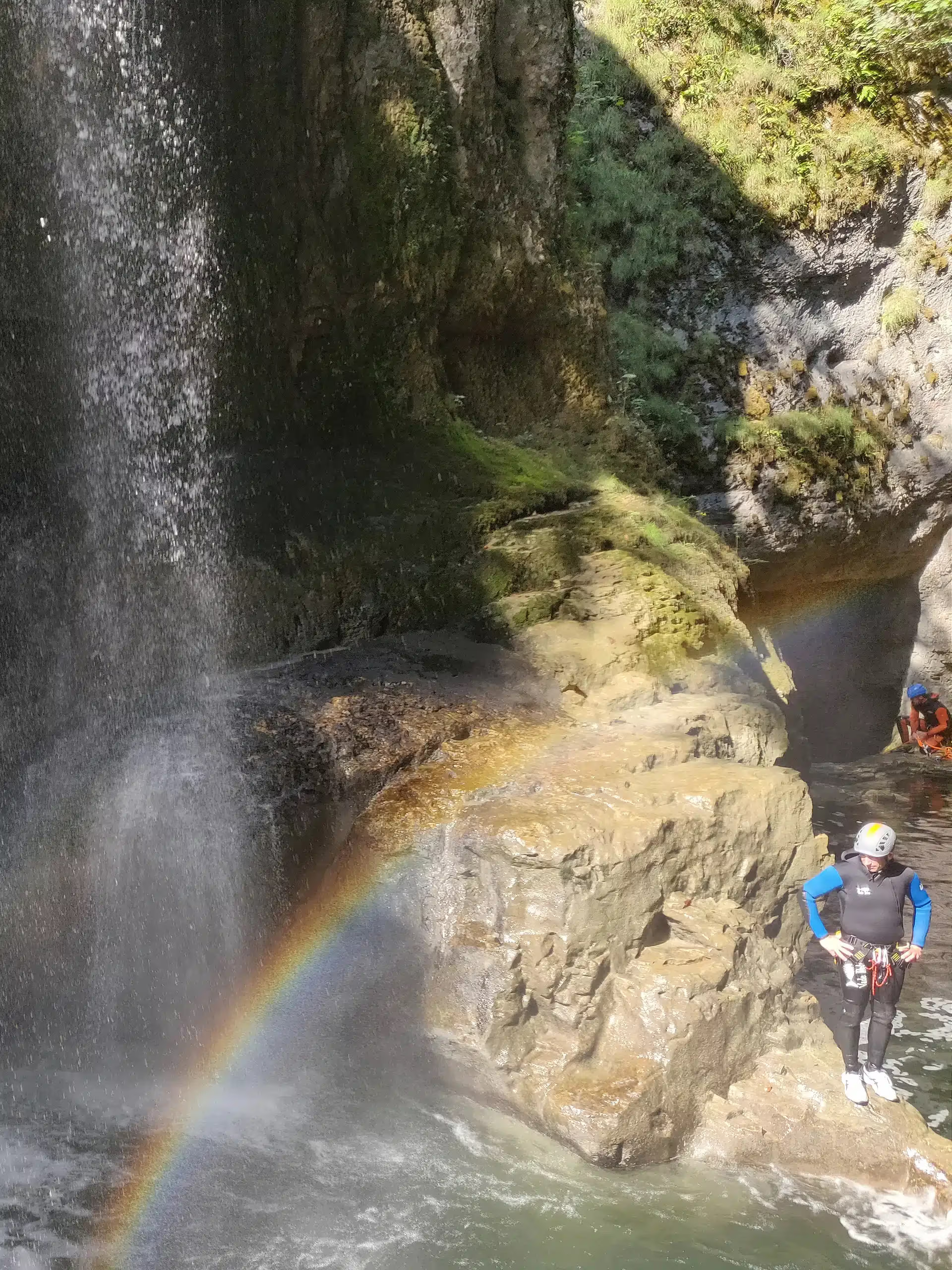 In December, an accessible valley or waterfall often keeps more interest than a wide viewpoint hidden by cloud.
4. Use lakes as a short stop, not as the whole day idea
Jura lakes can still look beautiful in December, especially when the light settles well or the air becomes very clear. But it is usually not the right month to build the whole day around a lakeshore.
The best use is often a scenic stop, a short walk or a photo break inside a broader plan. If the wind feels sharp or the sky closes quickly, you can leave without sacrificing the whole day.
5. Let snow guide the plan without making it mandatory
Some years, snow arrives early on the higher ground. Other years, it stays partial or only adds a more wintery atmosphere without creating a real snow-based programme. The smartest move is keeping a stay that works in both cases.
If there is a nice white setting, you can choose a short walk or a well-placed higher-altitude stop. If there is not, keep the plan built around villages, valleys, viewpoints and calm time blocks. The wrong reflex is going uphill at all costs just to rescue a winter image that is not really there.
6. Prepare the rain or fog plan from the start
In December, the backup plan is not a detail. It is often what separates an average day from a well-managed one. The simplest option is having a compact version of the day ready from the morning, with a village, food stop, indoor visit or very short walk.
If you want that logic close at hand, also keep what to do in the Jura when it rains nearby. The key is not waiting until mid-afternoon to react.
 In December, a good day often depends less on the big programme than on how quickly you can change rhythm or area.
7. Walk short in the middle of the day instead of trying to fill every hour
In December, one 1.5 to 2.5-hour walk chosen well is usually better than a longer route started too late. Light fades quickly, humidity tires people faster, and an over-ambitious outing leaves less margin if the ground turns slippery.
The format that works best is often simple: not too early a start, one real outing in the middle of the day, then a more sheltered end to the afternoon. It may sound modest, but it is often the most enjoyable way to use the month.
What is better to avoid in December?
- building the stay as if snow were guaranteed everywhere
- planning several long drives in the same day
- forcing a viewpoint if fog stays fully closed
- starting a big exposed walk too late
- waiting until midday to invent a backup plan
Bottom line
The Jura in December is a good idea if you want a short, scenic and flexible stay, not a checklist trip. Keep one compact area, one real main outing, short formats and a credible fallback plan, and the month often becomes much more enjoyable than people expect.