How does a canyoning trip in the Jura work?
If you have never done canyoning, the activity can look more technical than it really is. A guided trip in the Jura is structured, progressive and supervised from start to finish.
The exact route changes with the canyon, the water level and the group, but the organisation is usually the same.
Quick overview
- Arrival at the meeting point
- Equipment fitting
- Short approach walk
- Safety and technical briefing
- Progression through the canyon
- Jumps, slides, swimming or abseils depending on the route
- Return walk and debrief
1. Meeting and equipment
The guide welcomes the group at the meeting point, checks the booking details and explains the plan for the outing.
You usually receive:
- neoprene wetsuit
- neoprene socks
- harness
- helmet
- descender when the canyon includes abseils
You bring:
- swimsuit
- towel
- closed shoes that can go in water
- water for before and after the trip
For summer visitors, the important point is simple: arrive ready to get wet and keep valuables out of the canyon.
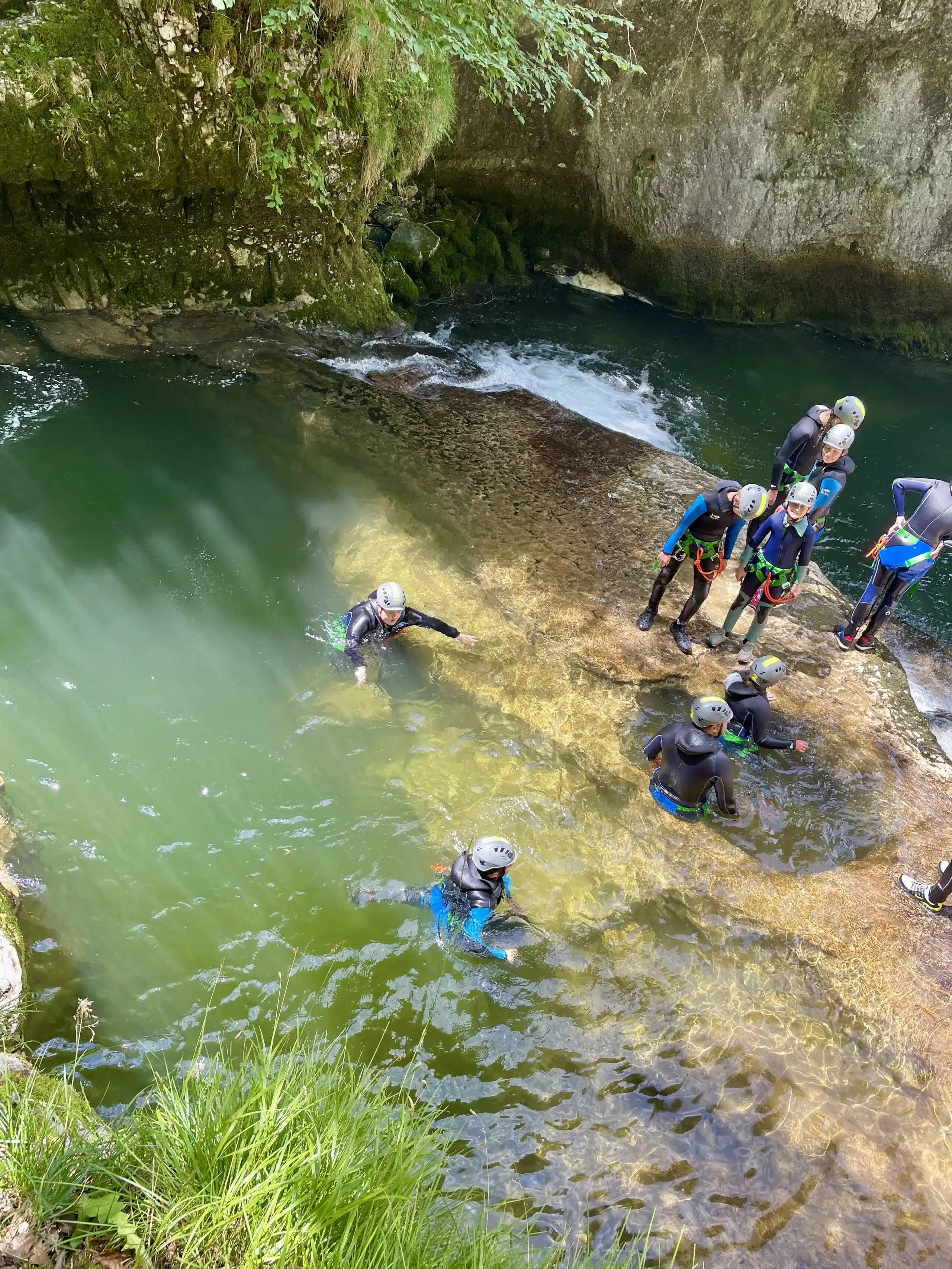 The provided gear keeps the group warm and helps secure technical sections.
2. Approach walk
Most Jura canyons used for guided outings have a short and manageable approach. Malvaux and Langouette are especially practical because the access and return are quick.
Some canyons, like Grosdar, can involve longer walking. This is not a problem, but it matters for families with young children or groups that want the easiest logistics.
3. Safety briefing
Before entering the water, the guide explains the basic rules:
- how to move on wet rock
- where to place your feet
- how to slide
- how to jump safely if you choose to jump
- how to listen to instructions in noisy sections
- what to do if you are not comfortable with an obstacle
This briefing is short, but it is important. Canyoning happens in a natural environment. The guide's job is to make the route clear and controlled.
4. Progression in the canyon
Inside the canyon, the group moves step by step. The guide chooses the rhythm and adapts the obstacles to the people in front of them.
Depending on the canyon, you may find:
- natural slides
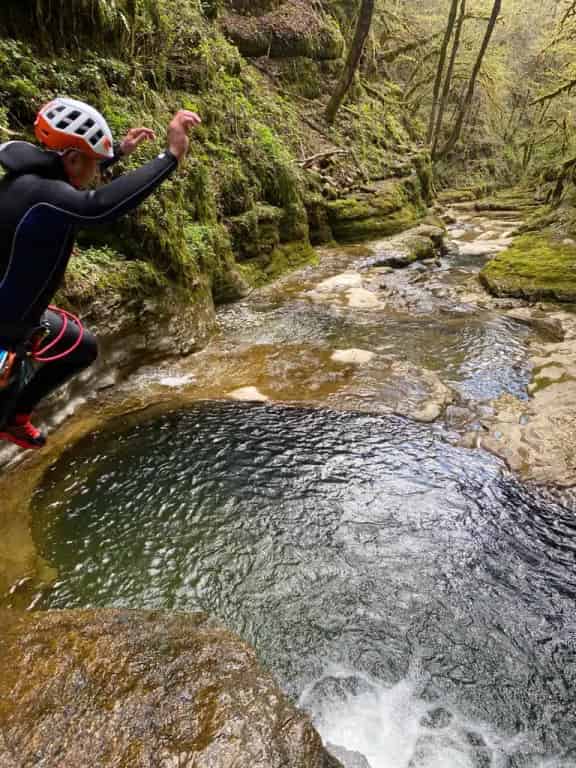
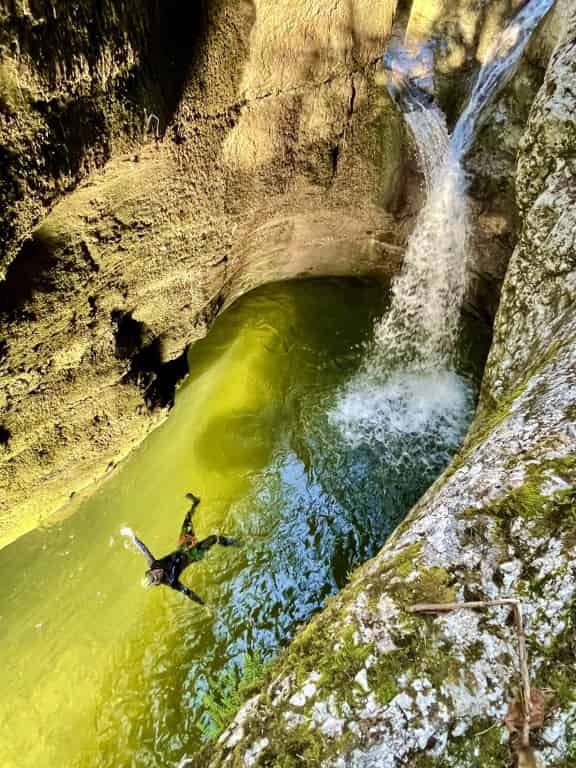
- jumps into pools
- swimming sections
- narrow passages
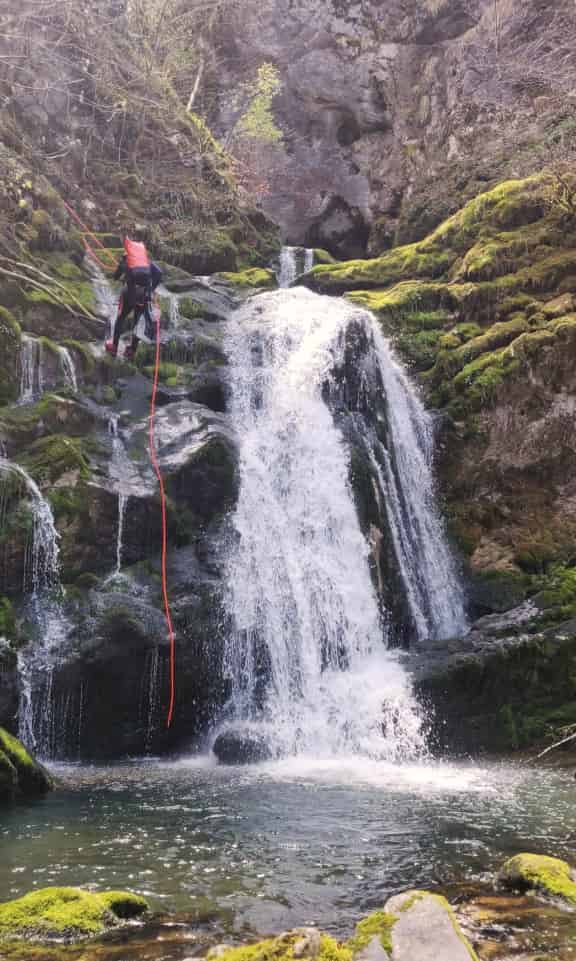
- small waterfalls
- abseils
- optional siphons
Not every canyon has every obstacle. Malvaux is playful and adaptable. Langouette is narrower and more intense. Coiserette is more spectacular and sporty. Grosdar is simpler and more accessible.
5. Jumps and optional obstacles
This is one of the main questions before booking: no, jumps are not always mandatory.
On routes like Malvaux, jumps are part of the fun, but the guide can usually propose another option. This is why Malvaux works well for mixed-level groups.
The right attitude is not to force the biggest jump. The right attitude is to choose a route where everyone can enjoy the outing without pressure.
6. Abseils and rope sections
Some canyons include abseils. Others do not.
Malvaux is reassuring for beginners because it does not require mandatory abseiling. Langouette and Coiserette can include more technical rope sections, which is why they are better for sporty participants or people ready for a more committed outing.
The guide manages the rope systems and explains what each person needs to do.
 Abseils are managed by the guide and explained before each passage.
7. End of the trip
At the end of the canyon, the group returns to the starting point or to the vehicles, depending on the route.
The end usually includes:
- return walk
- changing out of equipment
- short debrief
- sometimes shared photos
For most visitors, the whole outing takes around 2h30 to 3h30, depending on the canyon.
Which canyon is easiest for a first trip?
For a first guided trip in the Jura, Malvaux is usually the best choice. It has short logistics, optional jumps, playful sections and a route that can be adapted to the group.
For a calmer family discovery, Grosdar can also work well.
Before you book
Choose the canyon according to your group, not only according to photos.
- With children: choose Grosdar or Malvaux discovery
- With mixed levels: choose Malvaux
- With sporty adults: choose Langouette or Coiserette
- If you are unsure: choose Malvaux
Bottom line
A canyoning trip in the Jura is not just jumping into water. It is a guided progression through a natural route, with equipment, briefing, adaptation and safety decisions at every step.
For a first time, keep it simple: choose a guided outing, bring the right basics, and pick a canyon adapted to the weakest person in the group.