What to do in the Jura with a dog in summer
Yes, the Jura can work very well with a dog in summer, but not with a random plan. The most reliable format is usually simple: one early outing, shaded terrain, limited driving, and no activity that pushes the dog into heat, crowds or technical ground.
Quick answer
- best format: short morning walk + long break + one easy late-day stop
- best reflex: use shade and water as comfort tools, without assuming every beach allows dogs
- avoid: long hikes in the hottest hours, burning rock, crowded tourist sites and technical activities
- if you want a smooth day: stay in one area instead of trying to cross the whole Jura
What kind of format works best with a dog?
With a dog, the quality of the day depends more on pace than on the number of stops. In summer, you usually gain a lot by doing the real outing before 11 am, then keeping the middle of the day for proper recovery.
A strong structure often looks like this:
- one short walk or viewpoint early in the morning
- a long shaded break with water and calm time
- one second easy stop in late afternoon
That structure is much more reliable than trying to fit a lake, a waterfall, a village, a hike and a terrace meal into the hottest part of the day.
Where should you go without overcomplicating things?
The most comfortable outings are usually the ones that combine three things: readable terrain, natural shade, and the option to cut the plan short easily.
In the Jura, that usually points towards:
- short forest walks
- easy-access viewpoints
- cool waterside sectors, as long as local dog rules allow it
The classic mistake is choosing a famous place without checking how it works in real conditions. A beautiful site can still be a poor dog day if the path is crowded, the dog has to wait in the sun, or water access is restricted.
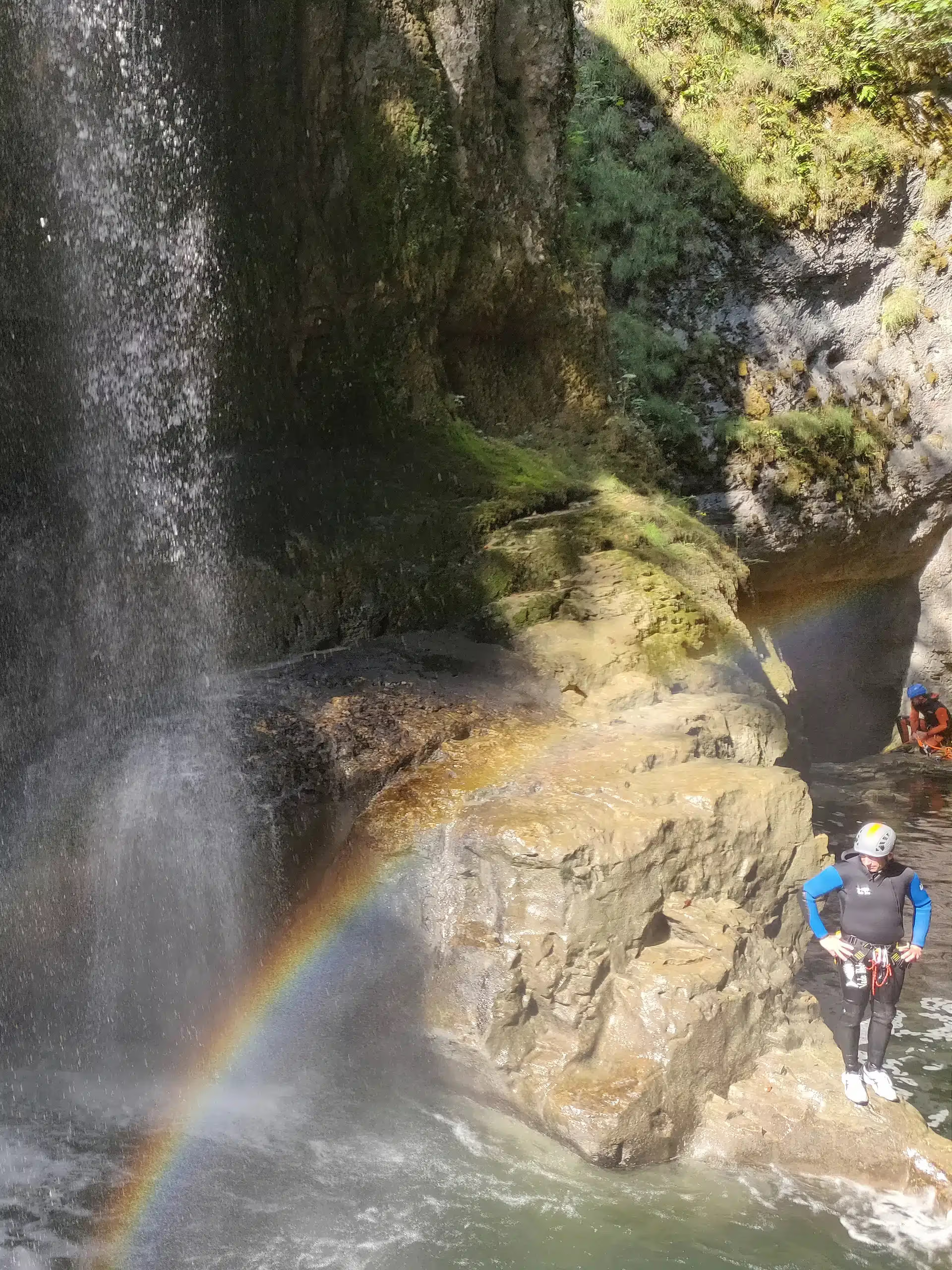 Shade and moving water usually make summer days much more comfortable, for you and for the dog.
What is better to avoid?
Some ideas sound good on paper but work badly with a dog in peak summer.
If possible, avoid:
- long exposed sections on road or car parks
- narrow paths packed with people in the middle of the day
- long walks with very little shade
- beaches where dog access is limited or banned
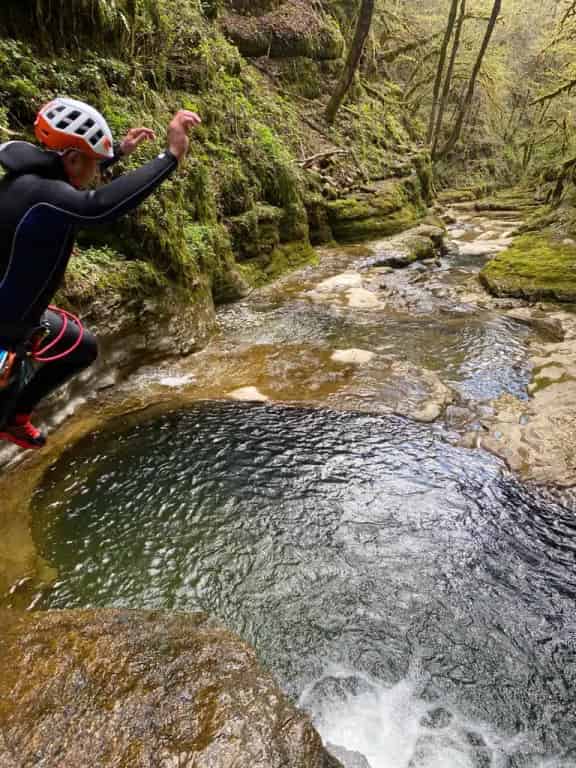
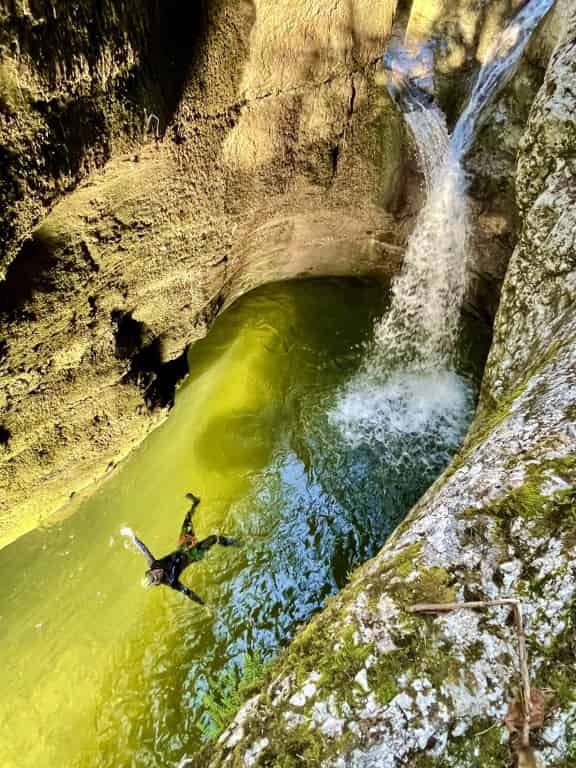
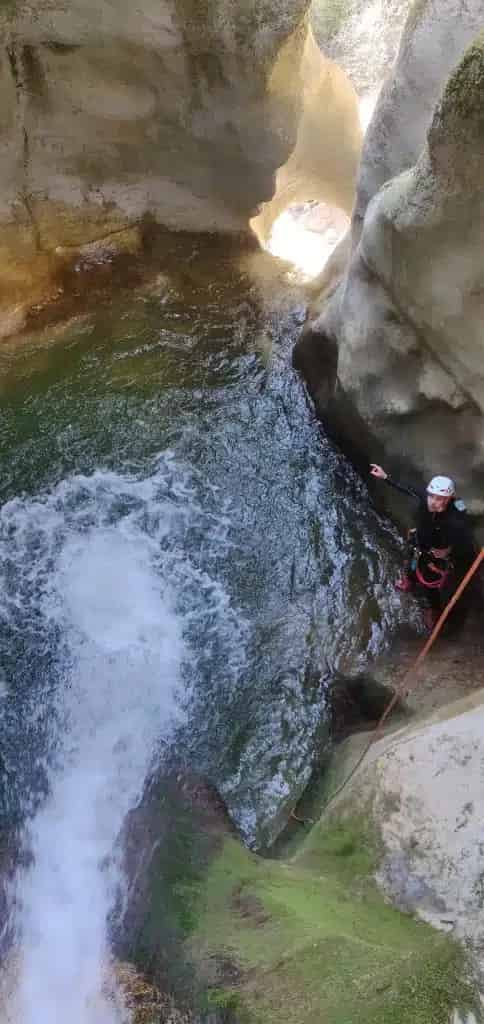
- activities such as canyoning or via ferrata
The useful criterion is not only distance. It is also ground temperature, access to water, crowd pressure and the stress load the place creates for the dog.
A simple day plan that works well
Morning
Start with an easy loop of 45 minutes to 1.5 hours, or with a viewpoint that needs only a short walk. Morning remains the best slot for real movement.
Midday
Keep a long calm break in the shade, with water and rest. If you plan a lake or river stop, check in advance whether dogs are allowed in the exact area you want to use.
End of day
Add only one bonus stop if the dog is still comfortable: a second viewpoint, a short walk or a quiet village. There is no need to overload the day.
 An easy viewpoint at the end of the day is often a better memory than one extra activity too many.
What if you want to book a guided activity?
If your main goal is a half-day of canyoning or via ferrata, treat the dog as a real planning constraint, not something to solve at the last minute.
The easiest options are often:
- coming with one person who does not join the activity
- arranging dog care for that time slot
- keeping the dog day separate from the guided activity day
To complete your plan, you can also look at:
- Where to swim in the Jura
- Best easy viewpoints in the Jura
- Guided canyoning in the Jura
- Guided via ferrata in the Jura
Bottom line
The Jura works well with a dog in summer when the plan stays short, shaded and realistic. The best day is not the one with the most stops. It is the one where the dog stays comfortable, you keep some margin, and the whole outing still feels good from start to finish.