Jura canyoning with teens: which canyon should you choose for ages 12 to 16?
With teenagers, the right canyon is not automatically the most impressive one. What matters more is choosing a route that keeps the pace high, avoids frustration and still matches the group's real level.
In the Jura, Malvaux is usually the easiest recommendation. Grosdar discovery works very well if you want something more progressive. Langouette and Coiserette start to make sense when the teens are already sporty and comfortable in water. Flumen should usually be kept for a more committed profile.
Quick answer
- best choice if the group is mixed or you are unsure: Malvaux
- best choice if you want to reassure people without making it feel too child-focused: Grosdar discovery
- good choice if the teens want a real canyon feel on a compact format: Langouette
- better kept for an even group that is already sporty: Coiserette
- only worth considering with older teens who are very motivated by vertical terrain: Flumen
1. What really changes with teenagers
Between 12 and 16, the question is no longer exactly the same as it is with younger children. You can aim for a livelier canyon, with more relief and a stronger feeling of activity.
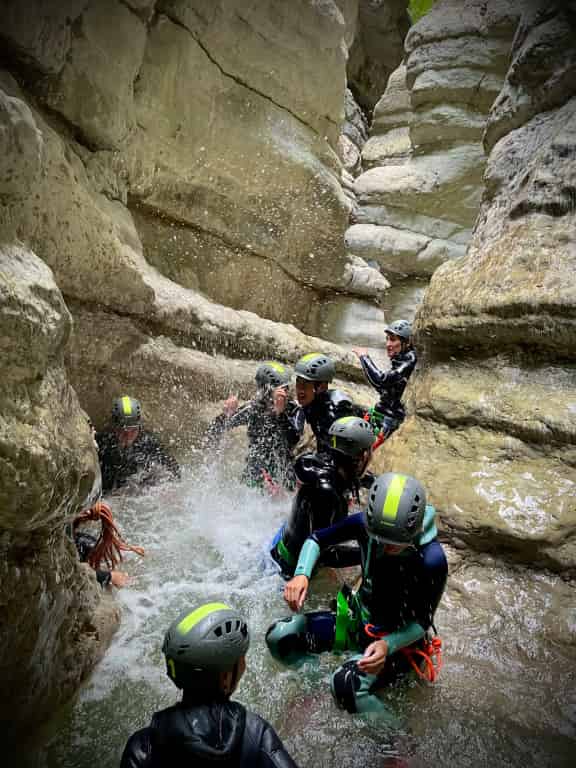
But it is still easy to overshoot. A teen group becomes hard to manage as soon as one person dislikes cold water, freezes in a narrow section, or ends up on a level chosen for the most motivated participant rather than for the group.
The safest rule stays simple: choose the canyon for the least comfortable person, while still keeping enough pace so the rest of the group does not feel bored.
2. The best starting point in most cases: Malvaux
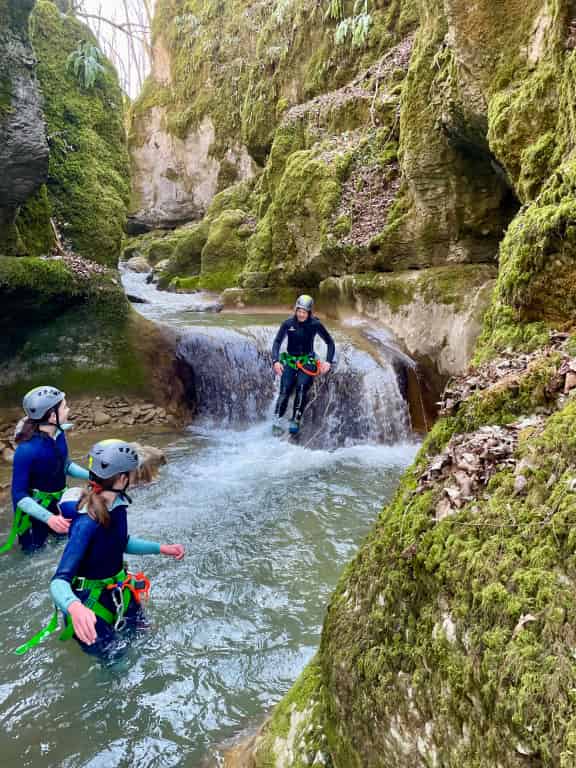
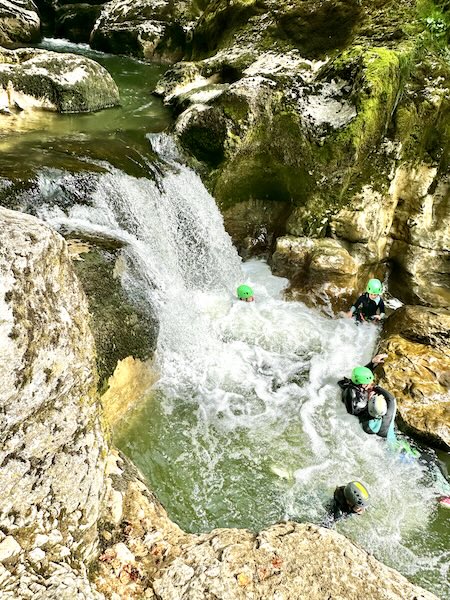
Malvaux is still the easiest canyon to recommend with teens if you want a strong balance between fun, movement and decision safety. The route feels lively, stays adaptable, and usually avoids the "too gentle" feeling that some teenagers reject immediately.
It is generally the right choice if you have:
- a group with mixed levels
- teens who like water but have no canyoning experience yet
- a goal of booking something memorable without jumping straight to a technical canyon
- a need for a format that stays easy to explain and easy to organise
Malvaux is especially useful if you do not yet know how the group will react to cold water, jumps or technical instructions.
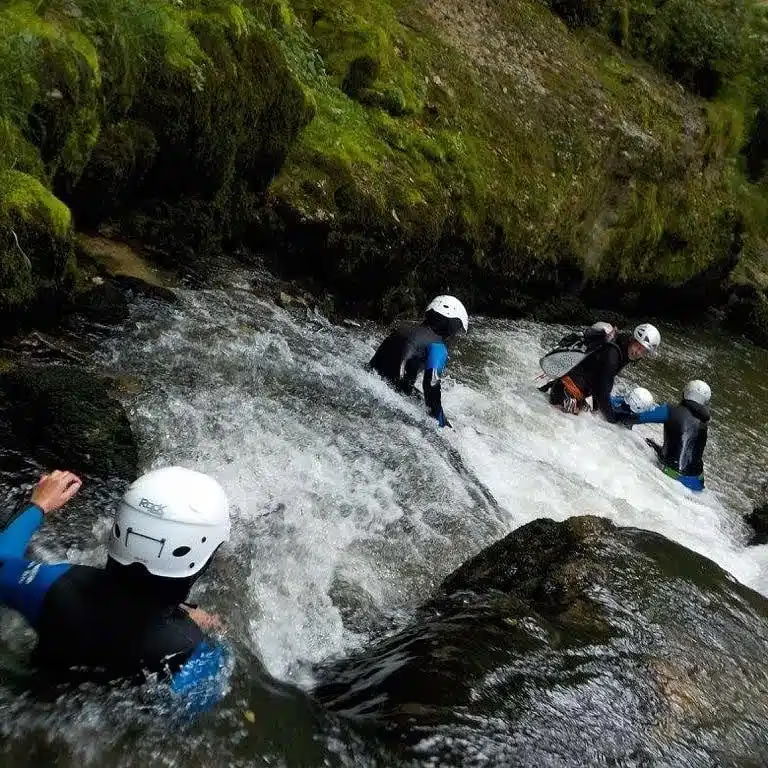 With teens, the right level is the one that keeps the outing moving without putting part of the group under pressure.
3. The best option if you want more progression: Grosdar discovery
Grosdar discovery is often a very smart pick for teens who want a real outdoor activity, but not yet a narrow or committed canyon. The setting stays playful, there are still memorable moments, but the overall feel is easier to read than in a sportier canyon.
It is a good choice if you want:
- a clear first experience
- a group where not everyone wants the same level of intensity
- teens aged 12 to 14 who want to try canyoning without getting overwhelmed too early
- a format that keeps a progressive logic
If your main goal is to build a good first outing, Grosdar is often a better move than choosing a canyon only for its photos.
4. When Langouette becomes the right call
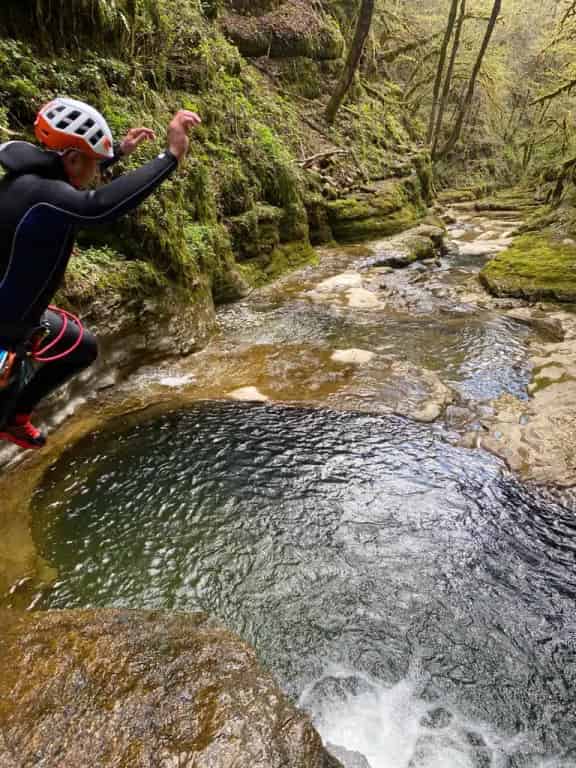
Langouette starts to make sense when the teens want a canyon that immediately feels narrower, punchier and more sporty. The format is compact, which often works well at that age if you want to avoid too much dead time.
That said, you need a fairly even group. If one person struggles with cold water, narrow sections or rope instructions, the outing can feel much more intense than it first sounds.
Choose Langouette if you have:
- teens who are already sporty
- real comfort in water
- a desire for something more dynamic than a discovery canyon
- a group that wants a short but memorable outing
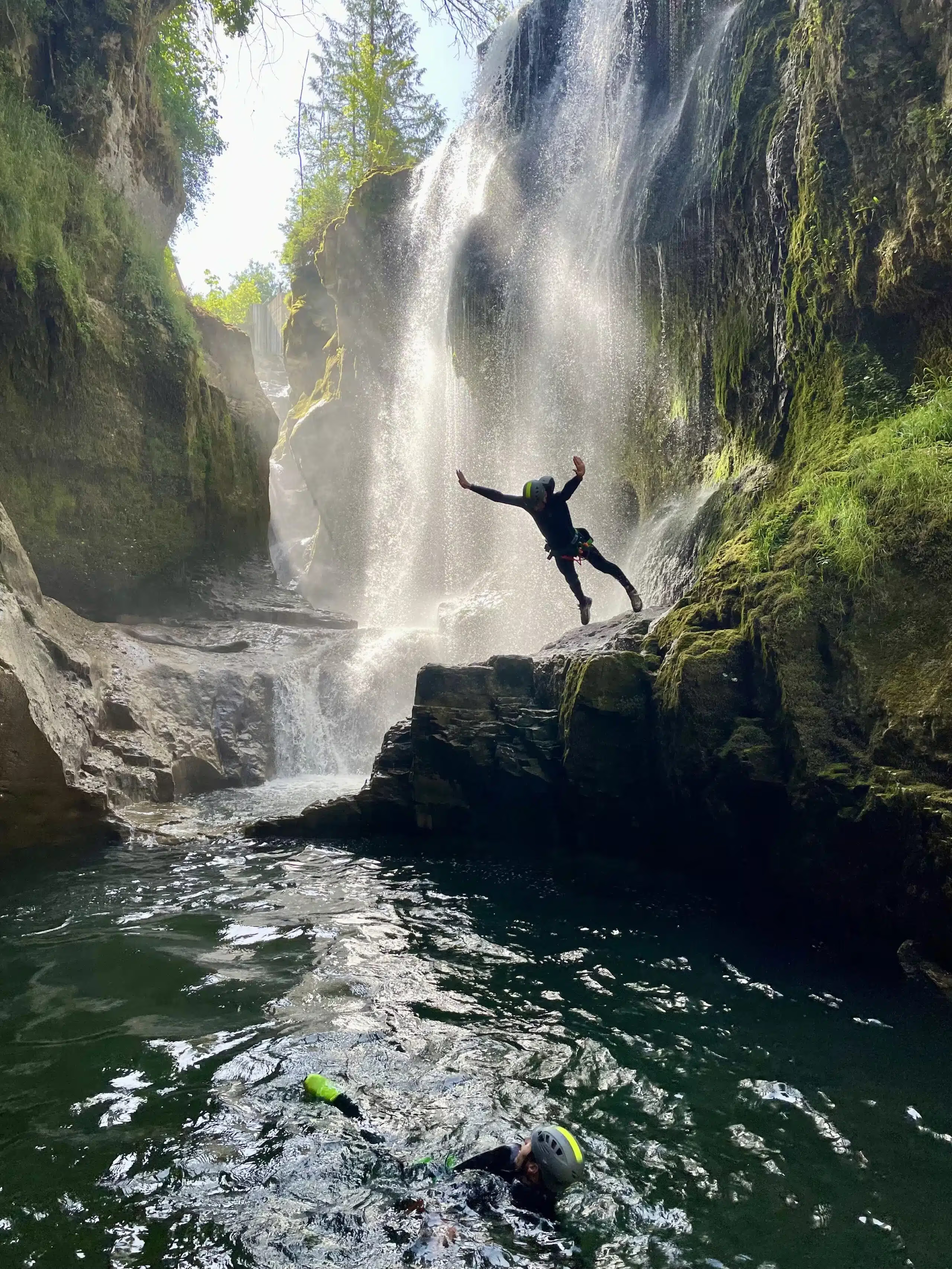 Langouette works well when the group wants a real canyon atmosphere, not just an easy water activity.
5. Coiserette and Flumen: better kept for very solid groups
Coiserette starts to make sense if the whole group wants a real step up. The canyon is more physical, more committed and more impressive than a discovery format.
Flumen goes even further in the sporty and vertical direction. This is not the article to use if you are looking for a simple first idea for a group of younger teens. But for older teenagers who are already sporty and clearly motivated, it can become a real option.
The right filter here is not simply "are they 14 or 15?". The better filter is:
- is the group even in level?
- is everyone comfortable in water?
- do the participants genuinely want a more committed canyon?
- is the outing being chosen for the whole group, not just for one very keen person?
If you hesitate, step down one level. With teenagers, a good first outing makes them want to come back. One that feels too hard can shut the door quickly.
 A more committed canyon is not just an age question. It is mostly a question of group consistency and genuine motivation.
6. Quick comparison
| Canyon | Level | Best profile | What to remember |
|---|---|---|---|
| Malvaux | Discovery to sporty | Mixed group, first real teen outing, friends, siblings | The easiest one to recommend without making it feel too gentle |
| Grosdar discovery | Discovery | Teens aged 12 to 14, group wanting something progressive | Easier to read, more reassuring, very good first canyon |
| Langouette | Sporty beginner to intermediate | Sporty teens already comfortable in water | Short, punchy, stronger canyon atmosphere |
| Coiserette | Sporty | Even group, motivated, already solid | A step more committed, not the best first choice |
| Flumen | Sporty to technical | Older teens already motivated by vertical terrain | Best kept for a truly sporty profile, not for reassurance |
7. What to check before booking
Before choosing a canyon with teens, look mostly at:
- real water confidence, not just visible enthusiasm
- the level gap between participants
- tolerance for cold water
- the ability to listen for the full outing
- whether the group wants fun, challenge, or mainly a clean first experience
If you want to compare levels first, the most useful starting point is how to choose canyoning in the Jura by level. And if you are ready to move to a guided outing, start from guided canyoning in the Jura.
Bottom line
With teens aged 12 to 16, Malvaux is usually the safest all-round choice if you want an outing that suits the widest range of participants. Grosdar discovery works very well for a more progressive first step. Langouette, Coiserette and sometimes Flumen make sense if the group is sportier, more even in level and genuinely asking for something more committed.