Is canyoning dangerous? Safety, guides and water levels in the Jura
Canyoning is an outdoor activity. It is not risk-free, and that is exactly why the route, the weather, the equipment and the guide matter.
For most visitors in the Jura, a guided trip is the right choice. It keeps the experience fun while leaving the technical decisions to someone trained for them.
Short answer
Canyoning is not dangerous when the outing is adapted, supervised and run in good conditions.
The main risks come from:
- water level
- slippery rock
- jumps done badly
- cold
- fatigue
- poor route choice
- groups that overestimate their level
A professional guide reduces those risks by choosing the right canyon, checking conditions and adapting the route.
Why water level matters
Water level changes everything in a canyon.
The same route can feel easy in summer low water and become unsuitable after rain or snowmelt. More water can make swimming harder, increase current, hide landing zones or make exits more complicated.
This is why canyoning is not just about knowing the map. A guide checks daily conditions and decides whether the route is appropriate.
In spring, water levels can vary with snowmelt. In summer, conditions are often more stable, but storms can still change the situation quickly.
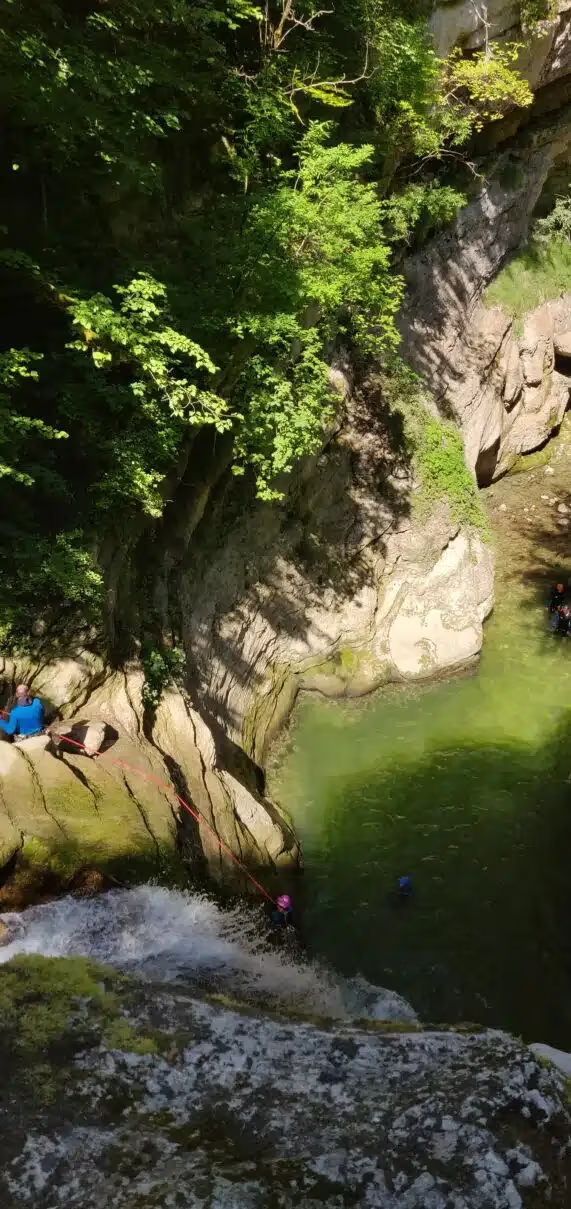 The same canyon is not handled the same way depending on the water present on the day.
What a guide actually does
A guide does more than lead the way.
Before and during the outing, the guide manages:
- water-level analysis
- weather and route choice
- equipment checks
- safety briefing
- rope installation
- jump and slide instructions
- group rhythm
- alternatives for nervous participants
- decisions to continue, adapt or stop
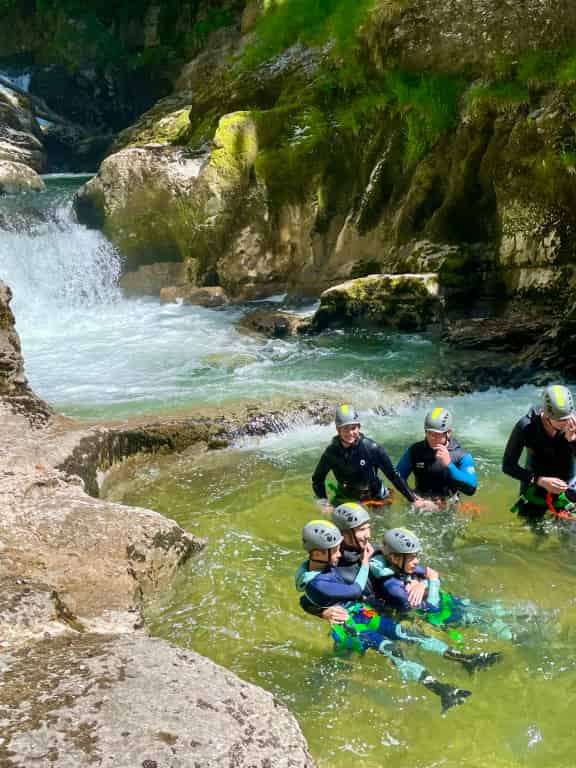
The guide also reads the group. A canyon that is technically possible may still be a poor choice if the group is tired, cold or not comfortable.
Why certified supervision matters
In France, professional canyoning supervision is handled by trained and state-certified instructors. This matters because canyoning combines several environments at once: water, rock, vertical sections, swimming and weather exposure.
Good supervision brings:
- technical competence
- local knowledge
- rescue and prevention skills
- appropriate equipment
- clear instructions
- better route choice
For a visitor on holiday, this is the simplest way to enjoy canyoning without carrying the technical burden.
Are jumps dangerous?
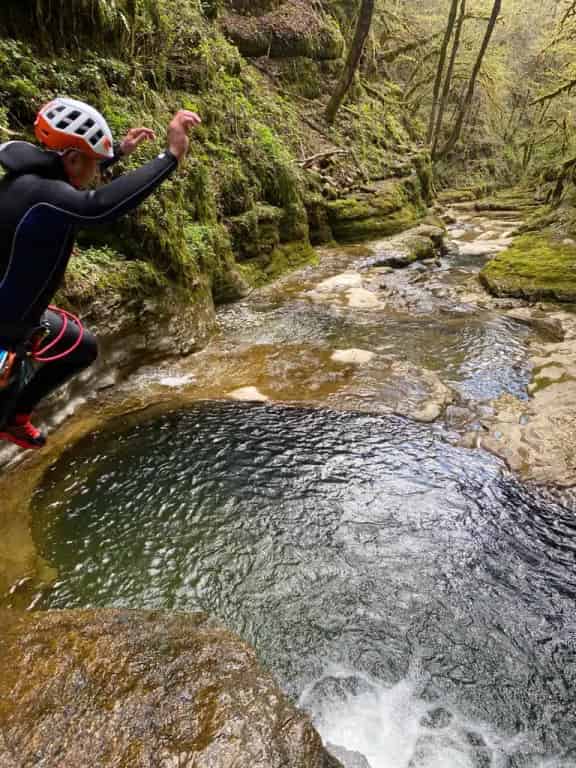
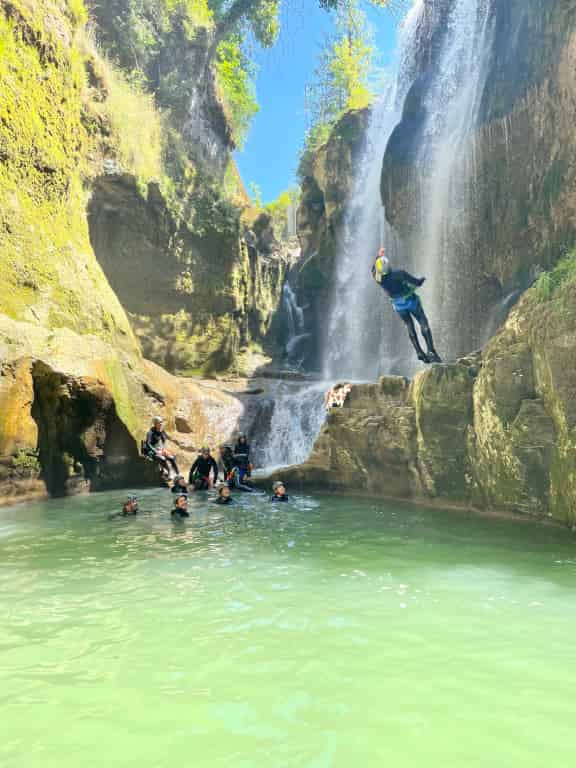
Jumps can be safe when they are checked, explained and adapted. They become risky when people jump without knowing the depth, landing zone or correct body position.
On guided outings, the guide chooses where jumping is possible and explains how to do it.
Important point: jumps are often optional. In canyons like Malvaux, a participant can enjoy the route without doing every jump.
What about abseils?
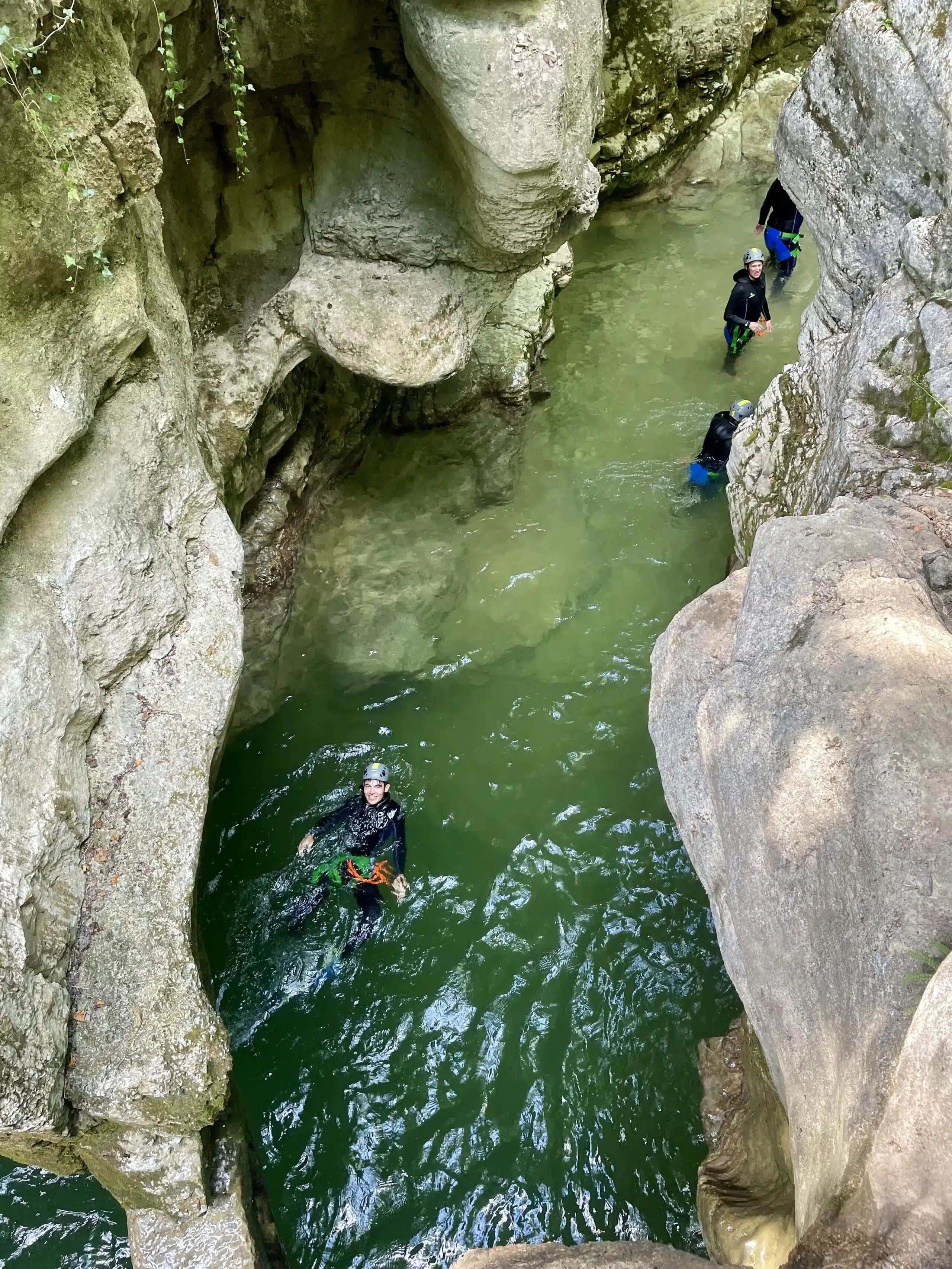
Some Jura canyons include rope sections and abseils. These parts require more technique than a simple discovery route.
The guide installs the rope system, gives instructions and secures the descent. Participants do not need to be rope experts, but they need to listen and follow instructions carefully.
 Rope sections require clear setup and precise instructions.
If you are not comfortable with heights, mention it before booking. The operator can help you choose the right canyon.
Choosing the right canyon is a safety decision
Safety starts before the outing. The main question is not “Which canyon looks best?” but “Which canyon fits this group today?”
For most first-timers, Malvaux is the safest recommendation because it is progressive and adaptable.
For families, Grosdar or a discovery version of Malvaux is usually better.
For sporty groups, Langouette or Coiserette can work, but only if everyone is comfortable with the required level.
What you can do as a participant
You do not need technical experience for a discovery canyon, but your attitude matters.
Before the trip:
- choose an adapted canyon
- be honest about swimming ability
- mention fear of heights or medical issues
- bring closed shoes
- avoid alcohol before the outing
- listen during the briefing
During the trip:
- wait for the guide's signal
- never jump without instruction
- say if you are cold, tired or scared
- do not pressure someone else to jump
- follow the group's rhythm
Is canyoning safe for children?
Yes, if the canyon, water level and weather are suitable.
Children need a route with simple logistics, clear obstacles and a rhythm that does not create stress. Grosdar and Malvaux discovery are usually better choices than sporty routes.
Age alone is not enough. A confident 8-year-old swimmer may be more comfortable than an older child who dislikes cold water or jumps.
Bottom line
Canyoning in the Jura is a controlled activity when it is guided properly. The risk is not zero, but it is managed through route choice, water-level checks, equipment, instructions and adaptation.
If you are new to canyoning, do not choose the most impressive route first. Choose the route that fits your group, then let the guide handle the technical decisions.